

How Fit Do You Need to Be for Annapurna Base Camp?
Seven checks you can do at home, one for each capacity the trek tests, so you know what to work on and how long you need.
 By Nathan Gee, BSc Sports Science · Updated 14 October 2026 · 8 min read
On the first morning two people set off from the same trailhead within minutes of each other: a runner in new shoes, and a woman in her sixties with a worn daypack and a very slow rhythm. By day four, the daypack is ahead. This is not a story about age. It is a story about being able to go again tomorrow.
You do not need to be an athlete. You need seven things in reasonable shape: an easy aerobic engine, time on your feet, uphill capacity, downhill durability, strength, comfort under a pack and the ability to repeat days. The checks below show your gap.
- Durability matters more than speed: repeat days, not fast days.
- Eight to ten weeks of specific work is usually enough for Base Camp.
- Altitude is separate from fitness, so plan for it as well.
So, how fit do you actually need to be?
Fit enough to repeat, not fit enough to race.
You need to be comfortable walking five to seven hours a day on stairs and slopes, descending with control, and recovering well enough to do it again tomorrow for about a week. That is durability more than speed, which is why a 10K time says little about how you will find it. Most people can get there in eight to ten weeks of specific training. The Circuit asks for the same qualities held for longer, and at a greater height.
 Stone steps · where the legs get tested
 River valley · forest and white water
 Above the trees · the valley opens up
 Upper valley · snow on the trail
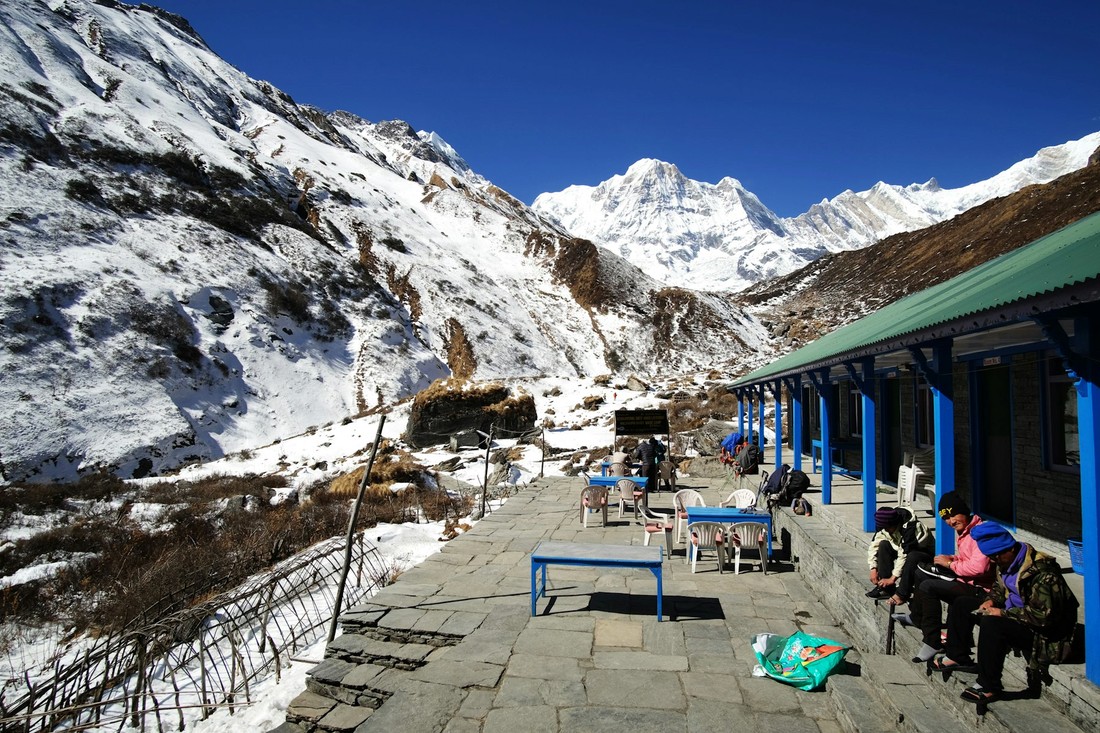 Teahouse terrace · rest with a view
The seven qualities that matter
The capacities Peaksted scores in the free readiness check. Switch the trek to compare.
Aerobic base
A steady engine for several hours of climbing and rolling trail, with altitude trimming the pace near the top.
Time on feet
Five to seven hours a day, repeated, with food and breaks built in.
Uphill capacity
Long stairways and a steady climb up the valley that reward patient pacing.
Downhill durability
The big one. Long descents on stone steps, and a long return day on tired legs.
Strength base
Control on steps and uneven ground, and stability under a pack.
Pack capacity
A daypack on most itineraries, more if you carry your own gear.
Multi-day durability
Walking strongly on day five after four days of climbing.
Tick what you can do today
Seven rough benchmarks, one per capacity. Be honest. This is a planning tool, not a test.
These are rough planning benchmarks. If two or more feel hard, give yourself ten weeks. For the Circuit, add a few weeks to the long-day and multi-day work.
Where the trail tests each quality
Fitness is only useful when it matches the demand.
Villages and stone steps
Uphill capacity and strength. Patient climbing, a steady cadence and quads that can go up stairs for an hour.
The river drop and climb
Downhill durability, then aerobic base. Long descents set up the climb that follows.
The long forest climb
Aerobic base and time on feet. Steady effort for hours, usually damp and cool.
The upper valley
Pacing and appetite as much as fitness. Altitude trims the speed you can hold.
The way back
Downhill durability and multi-day durability. A long day on legs that have worked all week.
Where fit people get caught out
It is rarely a lack of general fitness.
- Great cardio, untrained legs
Runners and cyclists often have the engine but not the eccentric strength for hundreds of stone steps down.
- Starting too fast
A pace that feels easy on day one becomes a problem by day four. The trek rewards restraint.
- Forgetting the way down
People train the climb and spend the last two days with painful knees.
- Not eating enough
Appetite fades with effort and height. An under-fuelled day feels like a fitness problem and is not.
Altitude: the wildcard
Fitness helps you move. It does not make you immune.
Even at 4,130 m altitude illness can affect anyone, whatever their fitness. How you ascend and how you respond to symptoms decide it. Tell your guide early, and descend if symptoms worsen.
Turn the list into a plan
Pick the row that sounds like you.
New to long days
Build easy walking volume and one weekly long walk. Allow ten weeks or more.
A regular weekend hiker
Add stairs, step-downs and one back-to-back weekend. About eight weeks.
Already strong
Train descents and rehearse a mountain day with your pack. About six weeks.
If you have a heart or lung condition, high blood pressure or a history of knee or back problems, speak to a doctor or physiotherapist first.
Who struggles, and why
The people who struggle are rarely the least fit.
Strong runners
They have the engine but not always the eccentric strength for hundreds of stone steps down. The legs give out late, and the knees complain.
Occasional walkers
They are comfortable for two or three hours and then run out of time on feet. Five to seven hours, day after day, is a different proposition.
People who start too fast
A pace that feels easy on day one becomes a problem by day four. The trek rewards restraint more than power.
People carrying too much
A heavy pack on stone steps magnifies every misstep. A light, well-organised daypack makes the trek easier.
Recovery and fuel count as fitness
You do not get fitter on the trail. You get through it.
The person who recovers best between days usually walks best on day five. That comes down to sleep, regular food and enough fluid, all of which are harder at height. Practise the habits in training: eat a proper meal within an hour of a long walk, drink steadily and treat sleep as part of the plan.
If you are planning the Circuit
Add the qualities Base Camp does not test.
For the Circuit, the checks above still apply, but three things move to the top: aerobic base, multi-day durability and altitude planning. Add four to six weeks to the plan, build to back-to-back long days with a pack and take acclimatisation seriously. A high pass is not a place to find out you are slow to adapt.
- Above the trees · the valley opens up
- Upper valley · snow on the trail
- Teahouse terrace · rest with a view
 Machhapuchhre · first light on the fishtail
 Annapurna South · big snow above the ridge
Before you ramp up
A short word of caution.
If you have a heart or lung condition, high blood pressure, a history of knee or back problems or you are returning from a long break, speak to a doctor or physiotherapist before you increase training and before you travel to altitude. Nothing here is a personal prescription.
Annapurna: FAQ
How fit do I need to be for Annapurna Base Camp?
Comfortable walking five to seven hours a day, climbing stairs and slopes steadily, descending with control and recovering well enough to repeat it for several days.
How long should I train?
Eight to ten weeks is a sensible window if you already walk regularly, and longer if you are starting from low activity. Allow more for the Circuit.
Do I need to run to prepare?
No. Stair and hill walking, step-downs and linked long days are more useful than running for this trek.
What is the biggest gap people have?
Downhill durability and repeat-day recovery. People train the climbing and forget the descent.
Is the readiness check really free?
Yes. It takes about three minutes and scores seven physical capacities against the trek you choose.
These checks are rough. The free readiness check scores all seven against this trek and shows your biggest gap.
- Annapurna Base Camp trek guideRoute map, day cards, versions and the seven demands.
- Nepal trekking hubEvery Himalayan trek Peaksted covers, with a route finder.
- Trek Ready, 8 weeksA structured plan that builds exactly these capacities.
- Eating and drinking at high altitudeHow to keep fuelling when appetite fades.
- How hard is Everest Base Camp?The classic Khumbu trek, rated the same way.
- How hard is Everest Three Passes?Three high crossings and the longest Khumbu circuit.
- Strength training for hikersThe two short sessions that protect your knees on descents.
- Stair training for trekkingThe most specific preparation for stone steps.
Sources and scope
Route and season information follows the Nepal Tourism Board page on the Annapurna Conservation Area and the Nepal tourism itinerary. Heights and stage times are approximate and vary with road access, weather and your itinerary. Confirm current permit, TIMS and guide requirements with an official source and a registered local operator. Altitude illness can affect anyone, whatever their fitness: tell your guide about symptoms and descend if they worsen. Training guidance is general and based on the demands described, not a personal prescription. Written by Nathan Gee, BSc Sports Science. If you have a health condition or injury, speak to a doctor or physiotherapist first.

