

Trek preparation · Part 1 of 3
How Hard Is Everest Three Passes Really?
Three high crossings, long days in thin air and little room to recover. Here is what makes Three Passes hard, and what makes it easier.
 Nathan Gee · 9 min read · Updated 10 Oct 2026
Everest Base Camp is the famous trek. Three Passes is what people do when they want more of the Khumbu: more days, more altitude and more of the high ground beyond the classic trail. It uses the same Lukla and Namche approach, then leaves the standard itinerary behind.
The short answer: Three Passes is hard because of how much it stacks. Three high crossings, each a long day, spread across roughly two to three weeks, with altitude and cold nights on top. It is not a technical climb, but it is a serious high-mountain trek.
The difficulty is not one hard day. It is three hard days, and everything in between.
What makes Three Passes hard
- Three long pass days. Kongma La, Cho La and Renjo La each make a distinct, high-effort day. Route order and conditions vary, so a flexible itinerary matters more than a fixed speed target.
- Altitude is a separate problem. Fit trekkers can still develop altitude illness. Acclimatisation days, awareness of symptoms and a willingness to stop or descend are essential.
- Terrain and weather change the plan. Snow, ice, wind or poor visibility can alter or close a crossing. Cho La in particular may involve icy ground.
- Long descents on tired legs. Every pass ends in a rough drop, often after many hours of effort.
- Limited recovery margin. Facilities are simpler and nights colder higher up, so there is less comfort to recover in.
- Distance~130–170 kmRoute-dependent
- Duration15–20 daysItinerary-dependent
- Highest crossing~5,535 mKongma La
- Pass days7–10 hoursNepal's published example
Three passes, three tests
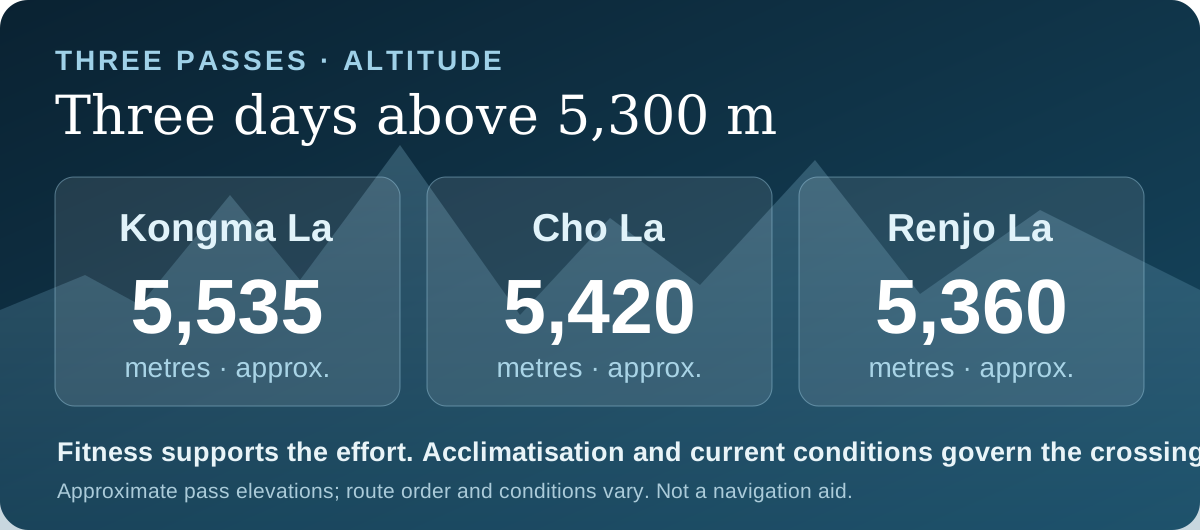
Swipe through the crossings. Heights are rounded and sources differ by a few tens of metres. Day lengths are from the example itinerary published by Nepal's tourism authorities, so treat them as a guide, not a promise.
First crossing, in the common direction
Kongma La
About 5,535 m
Chhukhung / Dingboche side
to LobucheThe highest of the three and the longest day in the published example. A high, rocky crossing and a long descent, usually reached after several acclimatisation days.
Train it: Pacing. This is the day to learn that a pace you can hold for hours beats a fast start.
Second crossing
Cho La
About 5,420 m
Dzongla
to Dragnag and GokyoRough rock and loose ground, with icy sections that can change the day. Conditions can shift quickly, so a flexible plan matters.
Train it: Footwork on uneven ground and controlled descents on tired legs.
Final crossing
Renjo La
About 5,360 m
Gokyo
to Lungden and ThameThe last big crossing, with wide views when the weather is clear, followed by a long, steep descent after many days of effort.
Train it: Back-to-back days. This one arrives when you are already tired.
The route at a glance
One common anticlockwise route acclimatises around Namche and Dingboche, crosses Kongma La towards Lobuche, visits the Everest Base Camp area, crosses Cho La to Gokyo, then returns over Renjo La and down via Thame. The order, side trips and number of days vary by operator and conditions.

How many days should you take?
The trek guide gives about 15 to 20 days, depending on the itinerary. Move the slider to see what the range means. More days do not remove the pass days. They add acclimatisation and a buffer for weather.
Balanced
3 pass days and 15 other days
A kinder rhythm for most people and a better chance of arriving at each pass rested.
More days add acclimatisation and weather buffer. They do not shorten the three pass days.
Four stages of the circuit

Lukla to Namche Bazaar
Approach
Established trails, steps and suspension bridges, with a steady climb up to Namche. The familiar start of the classic Everest route.
For training: Easy aerobic walking and steps. Practise holding a conversational pace from the first hour.
Is it harder than Everest Base Camp or Kilimanjaro?
They are different tests. Three Passes shares the Everest Base Camp approach, then adds three high crossings. See also How Hard Is Everest Base Camp Really? and How Hard Is Kilimanjaro Really?.
- Highest pointEverest Three Passes
Kongma La, about 5,535 m, with optional higher viewpoints
Everest Base CampAbout 5,364 m at Base Camp, about 5,600 m at Kala Patthar
- Typical lengthEverest Three Passes
About 15–20 days, often about 130–170 km
Everest Base CampAbout 130 km return, 12–14 trekking days
- Where you sleepEverest Three Passes
Teahouses and lodges
Everest Base CampTeahouses and lodges
- The big testEverest Three Passes
Three long pass days at altitude, with little recovery margin
Everest Base CampMany days in a row, with less recovery higher up
- Best preparationEverest Three Passes
Aerobic base, repeated climbs and descents, rough-ground footwork, linked long days
Everest Base CampTime on feet, repeat days, descents and pack work
What it demands of your body
Long days high above sea level demand a broad, sustainable aerobic base. Pace has to stay conservative.
When to go
Spring and autumn are the usual trekking windows. Tap a season to see what it means.
A usual trekking window
- The other usual window, often with settled mountain weather.
- Cold nights are normal higher up, so plan layers and a warm sleeping system.
- Check conditions and agree alternatives for every pass with your guide.
How to make it easier
- More days. Choose an itinerary with acclimatisation days and a weather buffer rather than the fastest option.
- A flexible plan. Agree alternatives for every pass, exit options and turn-around rules with your guide before you set out.
- Descent training. The part most people skip. See How to Train for Everest Three Passes.
- Train the linked days. See How to Train for Everest Three Passes.
- Check the rules. Permits and guide requirements depend on the route, so confirm current rules with the Nepal Tourism Board.
Are you ready for it?
The honest test is not one number. It is whether you can walk for hours with a pack, on consecutive days, and then walk down. These are useful signs, not a pass-or-fail exam.
0 of 7. There is work to do, and time to do it. Start with the first unticked items.
Get your full readiness scoreWhere to go next
 Part 2 of 3 · 9 minHow Fit Do You Need to Be?What kind of fit, how many weeks, and where fit trekkers get caught out.
 Part 3 of 3 · 12 minHow to Train for Everest Three PassesThe 16-week framework, a sample week and descent work.
Common questions
Train with Peaksted
Find out how ready you are
Three minutes, free. Choose Everest Three Passes to see your biggest gap and your next step.
Written by Nathan Gee. Sport scientist (BSc Sports Science) with a strength and conditioning background and eight years of coaching experience, focused on hiking and trekking performance. Peaksted guides are general education, not medical advice.


