
How fit do you need to be for a New Zealand Great Walk?
Less than you think, and more specific than you think. It comes down to three things you can train: strong legs, a steady engine, and feet and a back that can do it again tomorrow.
 By Nathan Gee, Peaksted coach · Updated · 6 min read
You do not need to be athletic. You need to be durable: able to walk for hours, climb steadily, come down without wrecking your legs, and do it again tomorrow.
That is strength and conditioning, and it is very trainable. No gym membership, no running, no jargon.
Be comfortable on your feet for four to seven hours, climbing steadily and ready to go again tomorrow. Train strong legs, an easy engine and back-to-back days.
The three things to train
Pick a tab. Each one says why it matters and what to actually do.
Strong legs: for the downhills
Everyone worries about the climbs. It is the long descents that finish people. Your quads brake every step down, so strong legs make day two and three feel very different.
- Step-ups3 sets of 8 to 10 each leg. Use a sturdy step or bottom stair.
- Slow step-downs3 sets of 6 to 8 each leg. Take three seconds to lower. This is the one that matters most.
- Sit-to-stand or squat3 sets of 10. Hold a bag of rice or a backpack if it feels easy.
- Calf raises3 sets of 12 to 15. Your calves do a huge amount on steep ground.
- Glute bridge3 sets of 10 to 12. Stable hips make for happier knees.
Go deeper: Strength training for hiking at home · Strength training for hikers
A steady engine: for the hours
It is four to seven hours of walking, day after day. You need a calm, easy engine, built by walking at a pace where you can still chat.
- Easy walksTwo or three a week, 30 to 60 minutes, at a chatty pace.
- One long walkAdd about 10 minutes a week until you reach two to three hours.
- Hills or stairsOne session a week at a steady effort. Walk down slowly and with control.
- Incline treadmillA good wet-weather stand-in for a hill.
- Running?Not needed. If you like it, it helps, but walking uphill is the real specific work.
Go deeper: Aerobic pacing · How long to train for a multi-day trek
Durability: for day two, three and four
The bit most plans skip. A long day, then again tomorrow, with a pack and boots, is its own skill. Your feet and back need practice, not just your lungs.
- Back-to-back daysA long walk on Saturday, then 45 easy minutes on Sunday. Tired-legs practice.
- Your real packAdd weight gradually. Food, layers, water. Check the fit and hip belt.
- Your real bootsWear them in, with the socks you will wear. Sort hot spots early.
- CarriesSuitcase carries and farmer holds, 3 rounds of 30 to 40 seconds. Builds back and grip.
- A wet sessionOne walk in the rain, so waterproofs and wet boots are not a surprise.
Go deeper: Pack weight and training load
What each Great Walk asks of you
The tag shows what to train most for each walk. See the full ranking for how they compare.

Abel Tasman Coast Track
About 60 km · 3 to 5 daysComfortable on your feet for several days. Not much climbing, but tides and long beach days.
Train most: Durability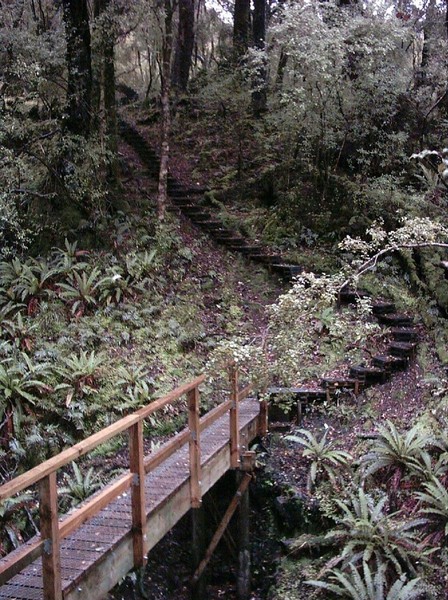
Rakiura Track
About 32 km · 3 daysFour to seven hour days in mud. Wet boots and steady pacing matter more than climbing.
Train most: Durability
Lake Waikaremoana
About 46 km · 3 to 4 daysA long, steady climb on day one, so a decent hill base helps.
Train most: Engine
Routeburn Track
About 33 km · 2 to 3 daysA sustained climb to Harris Saddle and five to six hour days in changeable weather.
Train most: Engine + legs
Heaphy Track
About 78 km · 4 to 6 daysNot steep, but a lot of days in a row. Time on feet and recovery are the test.
Train most: Durability
Kepler Track
About 60 km · 3 to 4 daysA big climb early, then an exposed ridge day. Fresh legs help most on day one.
Train most: Engine + legs
Milford Track
About 53 km · 4 daysA pass day with a long, steep descent, then a long final day, often in rain.
Train most: Legs + durability
Tongariro Northern Circuit
About 43 km · 3 to 4 daysSix to eight hour days on uneven, exposed volcanic ground.
Train most: Legs + engineA simple training week
Two short strength sessions, easy walks, one hill day and one long walk. Shorten it to fit your week.
- RestEasy stretch or a stroll. Recovery counts.
- Strength20 to 30 minutes: step-ups, slow step-downs, squats, calf raises.
- Easy walk45 minutes at a chatty pace.
- Hills or stairs40 minutes steady, then a slow, controlled descent.
- Strength20 minutes: lunges, bridges and a carry.
- Long walkTwo to three hours with a snack, water and your pack.
- Day-after walk45 easy minutes on tired legs. Great practice.
Five mistakes that catch people out
Tap one to see the fix. Every one is easy to sort before you go.
01Training the climbs, forgetting the descents
Hills feel like the hard part, so people train them. The descents are what make day two and three hurt. Add slow step-downs twice a week.
02Going too hard on easy days
If you cannot chat, it is not an easy walk. Hard days are for a short hill session. Everything else stays comfortable.
03Wearing new boots on day one
Blisters end more walks than fitness does. Wear them in over a few weeks, with the socks you will wear.
04One big weekend, then nothing
A single heroic 6 hour walk does less than steady weeks of 40 minutes. Little and often wins.
05Never practising day two
Your legs on day two are not your legs on day one. Do a long walk, then an easy one the next morning.
Where are you starting from?
Pick the one that sounds most like you. These are starting points, not a prescription.
Start with walking. Build to three easy 30 to 45 minute walks a week, then add a weekly hilly walk and two short strength sessions. Give yourself more than the usual ten weeks, and choose an easier walk, such as Abel Tasman.
- Walk three times a week at an easy pace
- Add a longer weekend walk, 10 minutes at a time
- Introduce two short strength sessions after week four
You have a base. Build one long hilly walk a week, add stairs or step-ups, and practise a longer walk followed by an easier one the next day. Routeburn, Heaphy and Kepler are all realistic.
- Keep one long walk a week and add hills
- Two short strength sessions, one with step-downs
- Practise a long walk, then an easier next day
You mostly need specifics: the descents, the second and third day, and the pack you will carry. Use the training guide as a sharpener, and add one session in the rain.
- Add descent work and step-downs
- Link two or three days with your real pack
- One wet-weather session, then taper in the last week
Ready to build it? Our ten-week Great Walks training guide has the plan and a sample week. Want it built around your walk and date? Try Trek Ready (8 weeks, self-guided), a personalised plan or 1:1 coaching.
Great Walk fitness: FAQ
I run regularly. Am I fit enough?
Running fitness gives you a good engine, but the walks ask for different things: hours on your feet, long descents and a pack. Add stairs, step-downs and a long walk with weight, and you are most of the way there.
Is there an age limit for a Great Walk?
No. People of many ages walk them. What matters is your current condition and how well you prepare. If you have a health condition, or are unsure, speak to your doctor first.
I am fit, but I am out of practice on hills. What should I do?
Add one hilly walk a week and some stair work for a few weeks. Hills use different muscles from flat walking or cycling, and descents are what most people underestimate.
I am worried about my knees. Can I still do one?
Many people can, but descents are what knees notice. Build strength and descending gradually, and speak to a physio or doctor first if you have pain or a diagnosed problem.
Do I need the gym?
No. Stairs, step-ups, incline walking and long walks cover most of it. A few strength sessions at home help your legs cope with descents.
What if I am slower than other people?
That is fine. These walks are about getting there comfortably, not racing. Walking at your own pace, and starting earlier, is a better plan than trying to keep up.
Can I be too fit for a Great Walk?
Not really, but fitness alone does not cover everything. Time on feet, the descents and the pack are what you want to be comfortable with, and weather and conditions are decided on the day.
The free readiness check takes about three minutes and shows which of the seven things to work on first.
Sources and scope. This is general strength and conditioning guidance, not medical advice. If you have a health condition, an injury or are unsure, get qualified advice before training or travel. Distances and days are rounded and vary by source. Check the Department of Conservation for current details. Written by Nathan Gee, BSc Sports Science; reviewed 13 October 2026.
Keep going: the five parts
Pick your walk, check you are ready, build the training, then go deep on Fiordland.
Want it built around your walk and date? Trek Ready (8 weeks, self-guided), a personalised plan or 1:1 coaching.


