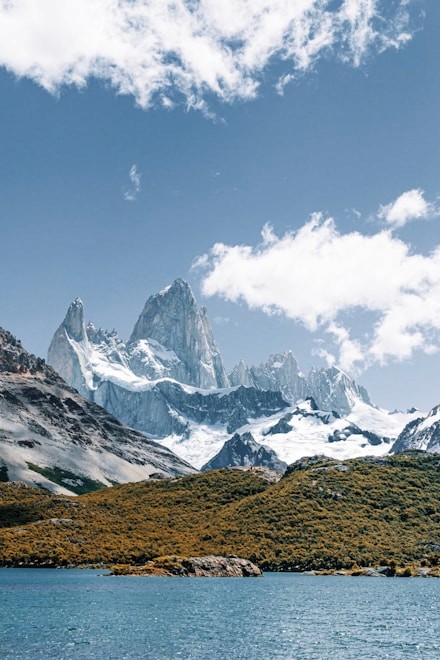
About 3,000 km the length of New Zealand, from Cape Reinga to Bluff. Four to six months of beaches, forests, farmland, rivers and alpine passes, and the ultimate test of multi-day durability.
About 3,000 km · North Island 1,828 km · South Island 1,363 km
Time on trail
4–6 months · 50–80 days per island
Highest point
Alpine passes in the South Island
Best season
Southbound starts late October to early December
Route type
Long-distance trail
Where you stay
Huts, camping and towns
Times, conditions and route variants can change. Check current local guidance before you set your itinerary.
OVERVIEW
Te Araroa runs about 3,000 km from Te Rerenga Wairua (Cape Reinga) to Motupōhue (Bluff), in 93 sections across 11 regions. The North Island is the more social half: beaches, forests, farmland, towns and cities, with frequent resupply. The South Island is remote and rugged, with alpine passes, river crossings and long stretches between towns. Most walkers take four to six months for the whole trail, and many walk one island or a section at a time.
Te Araroa runs about 3,000 km from Te Rerenga Wairua (Cape Reinga) to Motupōhue (Bluff), in 93 sections across 11 regions. The North Island is the more social half: beaches, forests, farmland, towns and cities, with frequent resupply. The South Island is remote and rugged, with alpine passes, river crossings and long stretches between towns. Most walkers take four to six months for the whole trail, and many walk one island or a section at a time.
Te Araroa runs about 3,000 km from Te Rerenga Wairua (Cape Reinga) to Motupōhue (Bluff), in 93 sections across 11 regions. The North Island is the more social half: beaches, forests, farmland, towns and cities, with frequent resupply. The South Island is remote and rugged, with alpine passes, river crossings and long stretches between towns. Most walkers take four to six months for the whole trail, and many walk one island or a section at a time.
Thru-hike · North and South Island
Free readiness check
How ready are you for your trek?
Twelve questions, about three minutes. Pick your trek, see your score and find the one gap worth fixing first.
Eleven regions from Cape Reinga to Bluff. Tap the trail or a bar, or step through with the buttons, to see the distance, the walking and what each region asks of your body.
Selected region
Te Araroa
River hazard zone
Cook Strait ferry
Region 1 of 11 · North IslandNorthland
463 kmabout 13 daysEasy to hard
The walking: It starts with about four days on Ninety Mile Beach, then muddy, rooty forest tracks through the Northland forests.
Your body: Flat, relentless beach kilometres test your feet before your fitness. The forests then add steep, slippery climbs.
Kilometre 0 to 463 from Cape Reinga
Distances, days and grades from the Te Araroa Trust. The line on the map is a simplified guide to the route, not for navigation. Use the official trail notes and maps.
North Island or South Island
Plenty of people walk one island at a time. They're very different journeys, so train for the one you're actually doing.
Distance
1,828 km
Regions
6
Sections
63
Time
50 to 80 days
The more social half of the trail: beaches, forests, farmland, towns and cities, with frequent resupply. It's a gentler introduction to long-distance walking, but don't mistake gentle for easy. Ninety Mile Beach, the Northland forests and the Tararua Ranges are all graded hard, and the road and pavement sections are tough on feet.
Distance
1,363 km
Regions
5
Sections
30
Time
50 to 80 days
Remote, rugged and wild: alpine passes, river crossings and long stretches between towns, so your pack is heavier for longer. The Trust describes it as a backcountry experience that asks for solid hiking skills. Most of its sections are serious, and this is where pack capacity and multi-day durability matter most.
Distances, sections and times are from the Te Araroa Trust, which updates them as the trail changes. Check the trail notes before you plan.
What the trail looks like
The start: walkers on the path to the lighthouse at Cape Reinga.
Cape Reinga, where the trail begins.
The Tongariro Alpine Crossing is part of the trail in the Whanganui region.
The Emerald Lakes, on the Tongariro section.
Rivers and streams are part of daily life, especially in the South Island.
Ranges and valleys of the kind you cross again and again.
Farmland and high-country stations: the trail crosses plenty of private land.
Lake Tekapo, where the trail passes through Canterbury.
High country above the southern lakes.
Lake Wānaka from above. The trail passes through Wānaka.
The finish: the signpost at Bluff.
1 of 11
What it asks of your body
The seven capacities Peaksted scores in the readiness check, for the full trail. Tap a row for the detail.
Aerobic base
Most days are long rather than fast. A strong aerobic base lets you walk all day, every day, without draining yourself.
Time on feet
Months of full walking days. This is the capacity the whole trail is built on.
Uphill capacity
The Tararuas, the Richmond Range and the South Island passes are serious climbs, often with a full pack.
Downhill durability
Long, steep descents on the South Island ranges, day after day, on legs that are already tired.
Strength base
Stability with a heavy pack on mud, roots, river beds and loose ground. Strong legs, hips and trunk keep you upright.
Pack capacity
You carry everything: shelter, food for several days between towns and safety gear. This is the biggest gap for most people.
Multi-day durability
The defining demand. Recovering overnight, for months, is what finishes Te Araroa.
Fit people still struggle on Te Araroa because they've never carried a full pack day after day. With food for several days between resupplies, the weight on your back changes how you climb, descend and balance. Running fitness doesn't cover this.
Build the load graduallyStart your weekend walks with a light pack and add weight over months, not weeks. Your feet, hips and shoulders adapt slower than your heart and lungs.
Train with the real packUse the pack, shoes and socks you'll walk in, loaded the way you'll carry them.
Rivers decide the day, not your legs
Rivers can rise quickly after rain and stay impassable for days. Two Canterbury rivers, the Rakaia and the Rangitata, are hazard zones with official bypasses. No amount of fitness makes a flooded river safe.
Learn river crossing properlyThe Mountain Safety Council teaches how to judge a river and cross with others. Do a course before you go.
Build in spare daysA walker who can wait a day for a river to drop is safer than one racing a schedule.
Storms happen in summer too
New Zealand weather changes fast, especially on the ranges. Expect cold, wind and rain at any time of year, and exposed tops where you can't easily shelter.
Carry for the worst dayWarm layers, a proper shell and emergency food, whatever the forecast in town says.
Carry a PLBThe Te Araroa Trust says to carry a personal locator beacon. Don't rely on your phone; large parts of the trail have no coverage.
Durability beats fitness on a long trail
Te Araroa takes four to six months. The fittest walkers don't always finish. The ones whose feet, knees and recovery hold up do. Small niggles that would settle in a week at home have no time to settle on the trail.
Strength train before you goSingle-leg strength, calves, hips and trunk make the joints that carry your pack more resilient.
Start slower than you want toYour fitness builds in the first weeks on the trail. Shorter days early on protect you for the months ahead.
TERRAIN PROGRESSION
On the Trail
Drag to explore
01 / READ FIRST
Read these before you decide
Short, free guides on this trek, from what makes it hard to how to train for it.
Three quick taps show where to start. It is not your full score.
03 / YOUR PLAN
Which Peaksted plan fits your Te Araroa preparation?
Months of preparation for months on the trail. Most Te Araroa walkers are best served by a plan built around their body, their island and their start date.
Answer both questions to see the plan that fits your Te Araroa preparation.
04 / PROOF
Who is coaching you, and what clients say
Nathan GeeBSc Sports Science · 8 years coaching strength and conditioning · mountain guide
Lauren JonesStudying towards NASM Sports Nutrition Qualification · co-founder and content lead
★★★★★
“Before Trek Ready I was doing plenty of cardio, but my training had no real structure. The programme gave me a clear plan and I felt noticeably stronger and more capable on longer hikes.”
“Having the training built around my actual trek made a massive difference. I knew exactly what I was training for each week instead of just trying to get generally fitter.”
About 3,000 km from Cape Reinga to Bluff, in 93 sections across 11 regions. The Te Araroa Trust lists the North Island at 1,828 km and the South Island at 1,363 km.
How long does it take to walk Te Araroa?+
Most people take four to six months for the full trail, or 50 to 80 days per island, depending on pace, weather and rest days.
How fit do I need to be for Te Araroa?+
Fit enough to walk full days, day after day, with a heavy pack, and to recover overnight. Your fitness builds on the trail, but the fitter and more durable you are at the start, the better your chances of finishing.
How long should I train for Te Araroa?+
Around six months is sensible for most people, especially to build up to carrying a full pack. If you already do regular multi-day tramps with a loaded pack, three months may be enough.
Is the South Island harder than the North Island?+
Generally, yes. The South Island is more remote, with alpine passes, river crossings and longer stretches between towns, so you carry more food. The North Island is more social, with more towns and resupply points.
Do I need skills as well as fitness?+
Yes. River crossing, navigation and the judgement to turn back matter as much as fitness. The Trust recommends carrying a personal locator beacon, and the Mountain Safety Council runs courses.
Peaksted does not book huts, transport or guides, and this is not a substitute for the official trail notes. Register with the Te Araroa Trust, check current trail alerts and hazard zones, and read their walker safety guidance before you go. What we cover is arriving prepared. Te Araroa Trust: plan your walk.
Written by Nathan Gee · Reviewed 6 Oct 2026 · General education, not medical advice. If you have a health condition, talk to a doctor before you train or book.

 The start: walkers on the path to the lighthouse at Cape Reinga.
 Cape Reinga, where the trail begins.
 The Tongariro Alpine Crossing is part of the trail in the Whanganui region.
 The Emerald Lakes, on the Tongariro section.
 Rivers and streams are part of daily life, especially in the South Island.
 Ranges and valleys of the kind you cross again and again.
 Farmland and high-country stations: the trail crosses plenty of private land.
 Lake Tekapo, where the trail passes through Canterbury.
 High country above the southern lakes.
 Lake Wānaka from above. The trail passes through Wānaka.
 The finish: the signpost at Bluff.


 Start here