
STRENGTH FOR THE MOUNTAINS / PACKS & POLES
Do Hikers Need Upper-Body Strength?
Practical exercises for packs, poles and trunk control.
Yes, but keep it in proportion. Legs and aerobic endurance do most of the work on a long climb. Upper-body and trunk strength help you handle a pack, use poles comfortably and maintain control on varied ground.
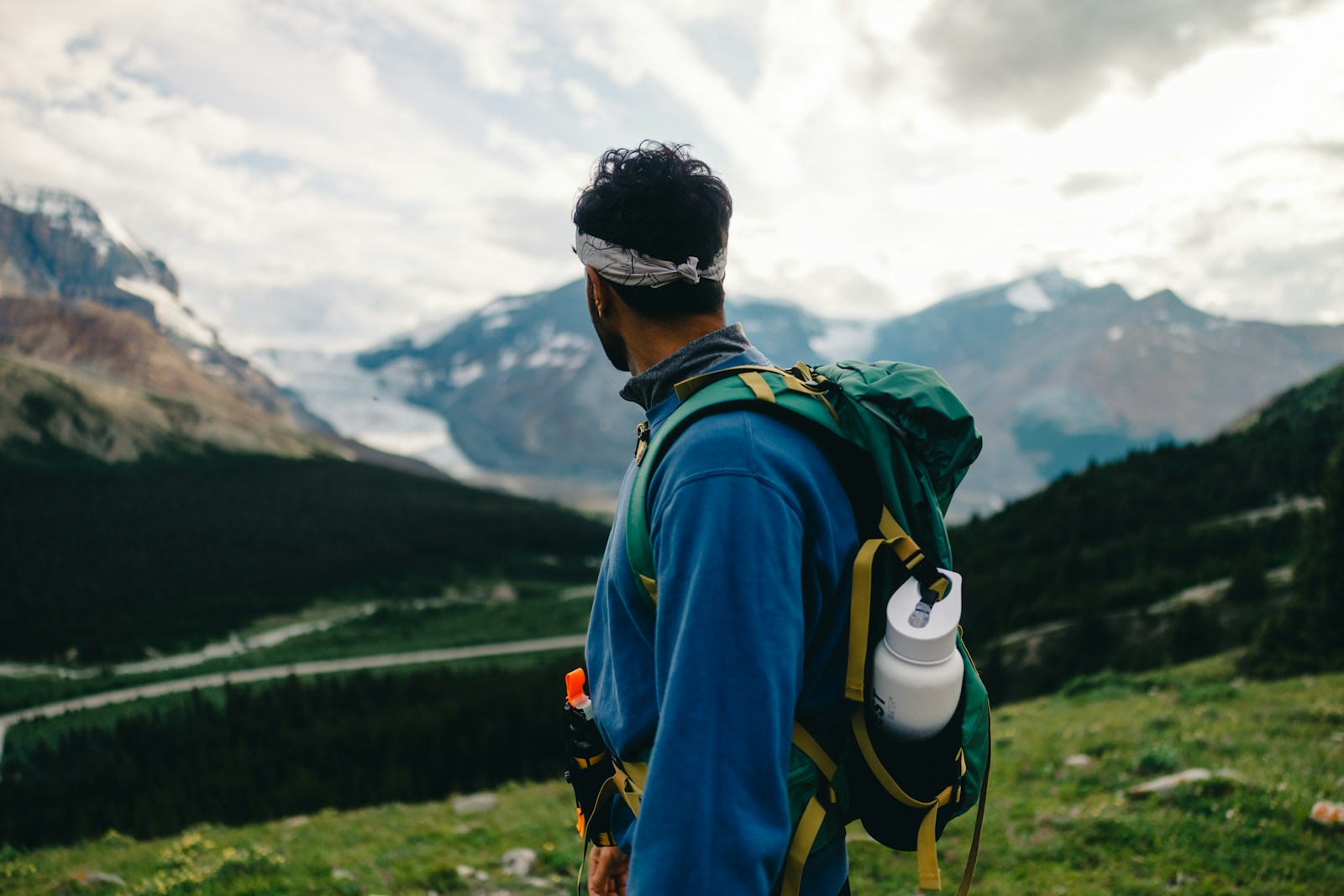
01 / WHAT THE UPPER BODY DOES
Four jobs worth training for.
Most uphill work still comes from the legs and cardiovascular system. Give upper-body work a supporting role: build enough pulling, pushing and trunk capacity to move well with a pack and across changing terrain.
Carry and handle a pack
Shoulders and upper back help manage straps and load, while your trunk keeps you upright. Pack fit matters as much as gym strength.
Use trekking poles
Pole technique asks for rhythm and repeated arm movement. Strong shoulders can support that task, but poles do not replace leg training.
Support occasional moves
Some routes involve using hands for balance or a short scramble. Train general pushing and pulling; practise actual terrain separately.
Control the trunk
A load can pull you sideways. Carries and anti-rotation work help you practise staying steady without stiffening every step.
02 / EXERCISES THAT EARN THEIR PLACE
Choose useful movement patterns.
These seven options cover pulling, pushing, carrying and trunk control. You do not need all seven in one session.
Horizontal rowUpper-back pulling
Why it helps: Helps maintain shoulder position while carrying and handling a pack.
Try it: Band row at home; cable or dumbbell row at the gym.
Vertical pullPulling through a different angle
Why it helps: Useful for general upper-body capacity; it does not reproduce a scramble.
Try it: Band pulldown or assisted pulldown; use a secure anchor.
Push-up or pressPushing strength
Why it helps: Balances pulling and helps with occasional supported movement.
Try it: Wall or incline push-up; dumbbell press if shoulders tolerate it.
Farmer carrySymmetric load carrying
Why it helps: Practises tall posture and steady breathing under load.
Try it: Two evenly loaded bags, one in each hand, or two manageable dumbbells.
Suitcase carryOne-sided load control
Why it helps: Challenges trunk control when a load pulls to one side.
Try it: One manageable dumbbell; walk slowly without leaning.
Pallof pressAnti-rotation
Why it helps: Practises resisting a sideways pull while keeping your trunk quiet.
Try it: Light band or cable with a secure anchor.
Side plankLateral trunk endurance
Why it helps: Adds simple control work without another heavy lift.
Try it: Bend the lower knee to start; lengthen the lever as you improve.
03 / UPPER-BODY + CORE SESSION
One compact workout, two setups.
Suitable for someone already exercising regularly. Warm up for five minutes, then choose a load that leaves two or three clean repetitions in reserve. Complete these movements in order. The session takes roughly 25–35 minutes.
Home version
- Band row or prone W raise2 × 8–12Rest 60 sec
- Incline push-up2 × 6–10Rest 60 sec
- Backpack carry2 × 20–40 secRest 60 sec
- Pallof press or dead bug2 × 8–10 / sideRest 45 sec
- Side plank2 × 15–30 sec / sideRest 45 sec
Gym version
- Cable or dumbbell row2 × 8–12Rest 60 sec
- Pulldown2 × 8–12Rest 60 sec
- Dumbbell press2 × 8–10Rest 60 sec
- Suitcase carry2 × 20–40 sec / sideRest 60 sec
- Pallof press2 × 8–10 / sideRest 45 sec
Progress by reaching the top of a rep or time range twice with good control, then add a small amount of resistance. A carry should finish before your posture or gait changes. Keep the harder upper-body session away from a day when pack carrying already leaves you fatigued.
No band at home? Use a prone W raise for shoulder control and a dead bug for trunk control. Neither loads the back like a row, so add a band or gym row when you can. If you already lift twice a week, put one pull, one push and one carry or trunk exercise into those sessions instead of adding another hard day.
PEAKSTED / TREK READY
Put the pack work in its place.
Upper-body work belongs alongside leg strength and time on your feet. Peaksted's programme fits those pieces around a repeatable week. Trek Ready brings strength, aerobic work, climbing and descending preparation, pack practice and Mountain Days into an eight-week programme.
- Base and Summit tracks: four or five weekly sessions
- Home and gym exercise options
- Progression and tracking through FITR
04 / COMMON MISTAKES
Strength that actually transfers.
Pulling, pushing and carrying patterns matter more here than extra isolation work.
Build repetitions and control before heavier carries or more pole volume.
A poorly adjusted or overloaded pack can remain uncomfortable even if you are strong.
Upper-body work often fits inside the two full-body sessions you already have.
Will stronger shoulders make a heavy pack feel easy?
Strength can help you tolerate carrying work, but comfort also depends on fit, realistic load, time on your feet and how gradually you build pack exposure.
Do trekking poles replace upper-body training?
No. Pole use is a skill and repeated movement, while strength work builds broader capacity. Practise with your poles outdoors before your trek.

