
Altitude · Part 4 of 4
Kilimanjaro Altitude Explained
What actually happens to your body as you climb, what to watch for, and why being fitter does not make you altitude-proof.
 Nathan Gee · 8 min read · Updated 6 Oct 2026
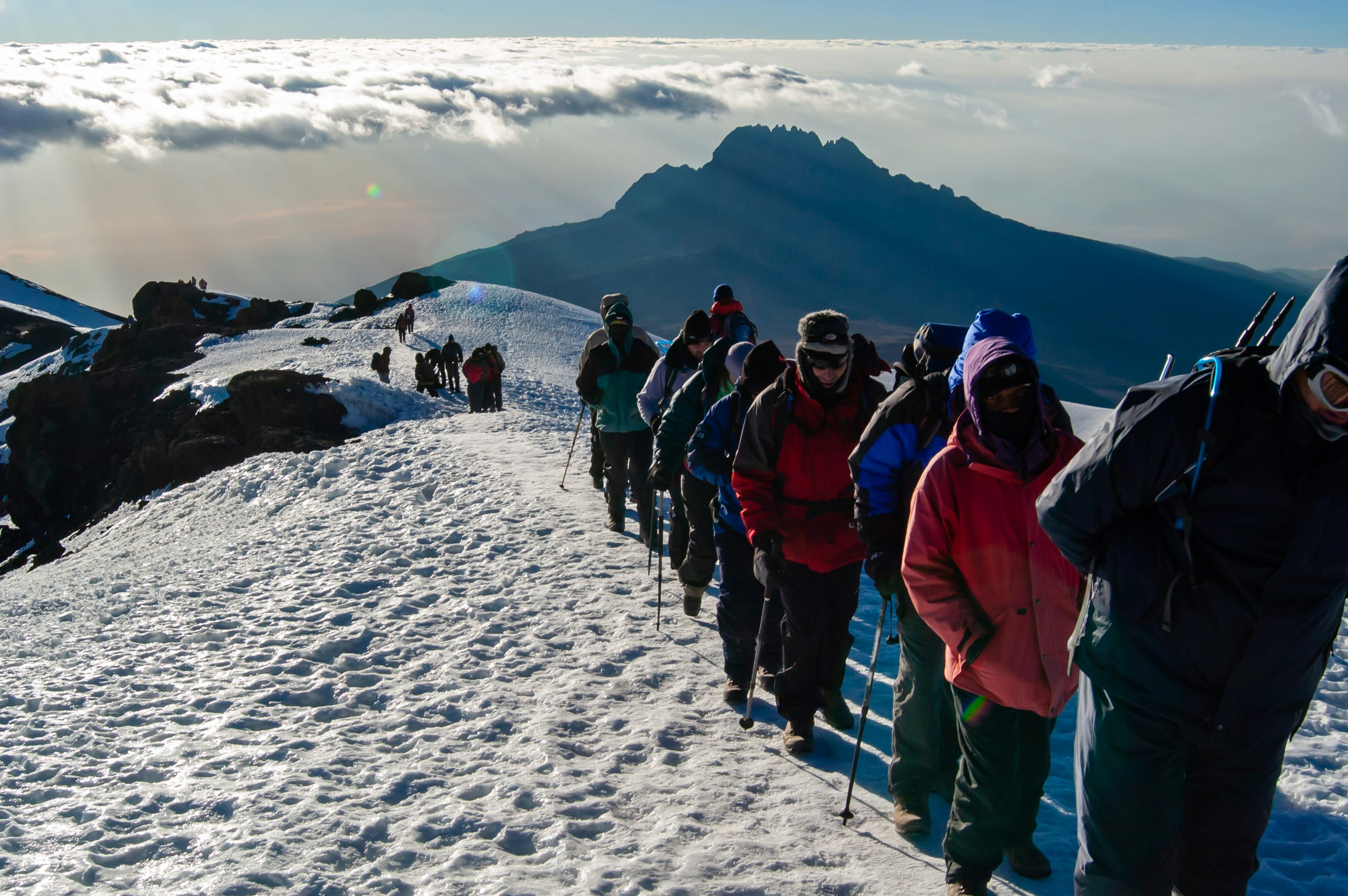
Kilimanjaro takes you from a warm, humid forest to a frozen summit in a few days. The mountain itself is easy to walk. The altitude is the part that decides how the climb goes, and it is the part fitness cannot buy you out of.
The strongest person is not always the safest at altitude.
How does altitude affect your body on Kilimanjaro?
Air pressure falls as you climb, so each breath carries less oxygen. At the summit there is roughly half the oxygen of sea level in each breath. Your body responds by breathing faster and harder, and your heart works at a higher rate for the same effort. Over days, it also makes more red blood cells and adjusts in other ways. This adjustment is called acclimatisation.
- You get breathless sooner, and the same effort feels harder.
- Sleep is lighter and more broken.
- Appetite and thirst drop, even though you need food and water more.
- Cold and tiredness feel worse and judgement can slip.
How much oxygen is there on Kilimanjaro?
Oxygen makes up the same share of the air at every height. What falls is air pressure, so each breath delivers less. The bars show approximate figures from the standard atmosphere.
- Sea level100%
- 2,000 m79%
- 3,000 m70%
- 4,000 m62%
- 5,000 m54%
- 5,895 m48%
What does "climb high, sleep low" mean?
Acclimatisation takes time, and the best itineraries use that. They climb to a higher point in the day, then sleep lower, so your body gets a taste of altitude without a full night at it. The graphic shows an approximate seven-day profile. Real heights vary.
- Day 1 Forest to first camp (high about 2,900 m, sleep about 2,900 m)
- Day 2 Moorland to Shira (high about 3,800 m, sleep about 3,800 m)
- Day 3 High point at Lava Tower, sleep lower (high about 4,600 m, sleep about 3,950 m)
- Day 4 Barranco Wall to Karanga (high about 4,000 m, sleep about 4,000 m)
- Day 5 Short day to Barafu (high about 4,670 m, sleep about 4,670 m)
- Day 6 Summit night, then down to Mweka (high about 5,895 m, sleep about 3,100 m)
Why a longer itinerary helps
Operators' figures vary widely, but the pattern is consistent: itineraries that give you more days, and a gradual ascent profile, tend to work out better than short, steep ones. Ask any operator how many days they offer, how their route builds height, and what their plan is if someone is unwell. The route-by-route comparison is in How Hard Is Kilimanjaro Really?.
Symptoms of altitude sickness: green, amber, red
Altitude illness ranges from mild to life-threatening. Treat the traffic light as a general guide, and follow your guide's and your doctor's advice.
- Green
Mild headache, slightly tired, sleep not great, appetite a bit low.
What to do: Common. Slow down, drink, rest, and keep telling your guide how you feel.
- Amber
Persistent or worsening headache, nausea, dizziness, unusual tiredness, poor appetite.
What to do: Do not go higher. Rest, discuss with your guide, and be ready to descend if it does not improve.
- Red
Confusion, unsteady walking, breathlessness at rest, a wet cough, severe headache.
What to do: Serious. Descend now, get help, and do not go up again.
How to prepare for altitude on Kilimanjaro
- Talk to a doctor or travel clinic well before you go. They can advise on medication, health conditions and what suits you.
- Choose an itinerary of seven days or more if you can.
- Walk slowly from day one, and drink and eat on a schedule.
- Avoid sleeping pills and alcohol at altitude unless advised by a clinician.
- Check that your insurance covers trekking at this height and emergency evacuation.
- Tell your guide how you feel, honestly and early.
Does fitness help with altitude?
Good training makes the walking cheaper, so you have more in reserve when conditions are hard. It does not stop altitude illness. How Fit Do You Need to Be for Kilimanjaro? covers what fitness can and cannot do, How to Train for Kilimanjaro the training side, and How Hard Is Kilimanjaro Really? the bigger picture.
Common questions
Train with Peaksted
Prepare for the whole mountain
Altitude is half the climb. Check your readiness for the other half.
Written by Nathan Gee. BSc Sports Science, 8 years coaching strength and conditioning, and a mountain guide. Peaksted guides are general education, not medical advice.
Sources and further reading
- Tanzania National Parks (TANAPA): Kilimanjaro visitor guide
- Wilderness Medical Society: Clinical practice guidelines for acute altitude illness (2019 update)
- US CDC Yellow Book: Altitude illness


