DAY HIKE · AOTEAROA
Brewster Track
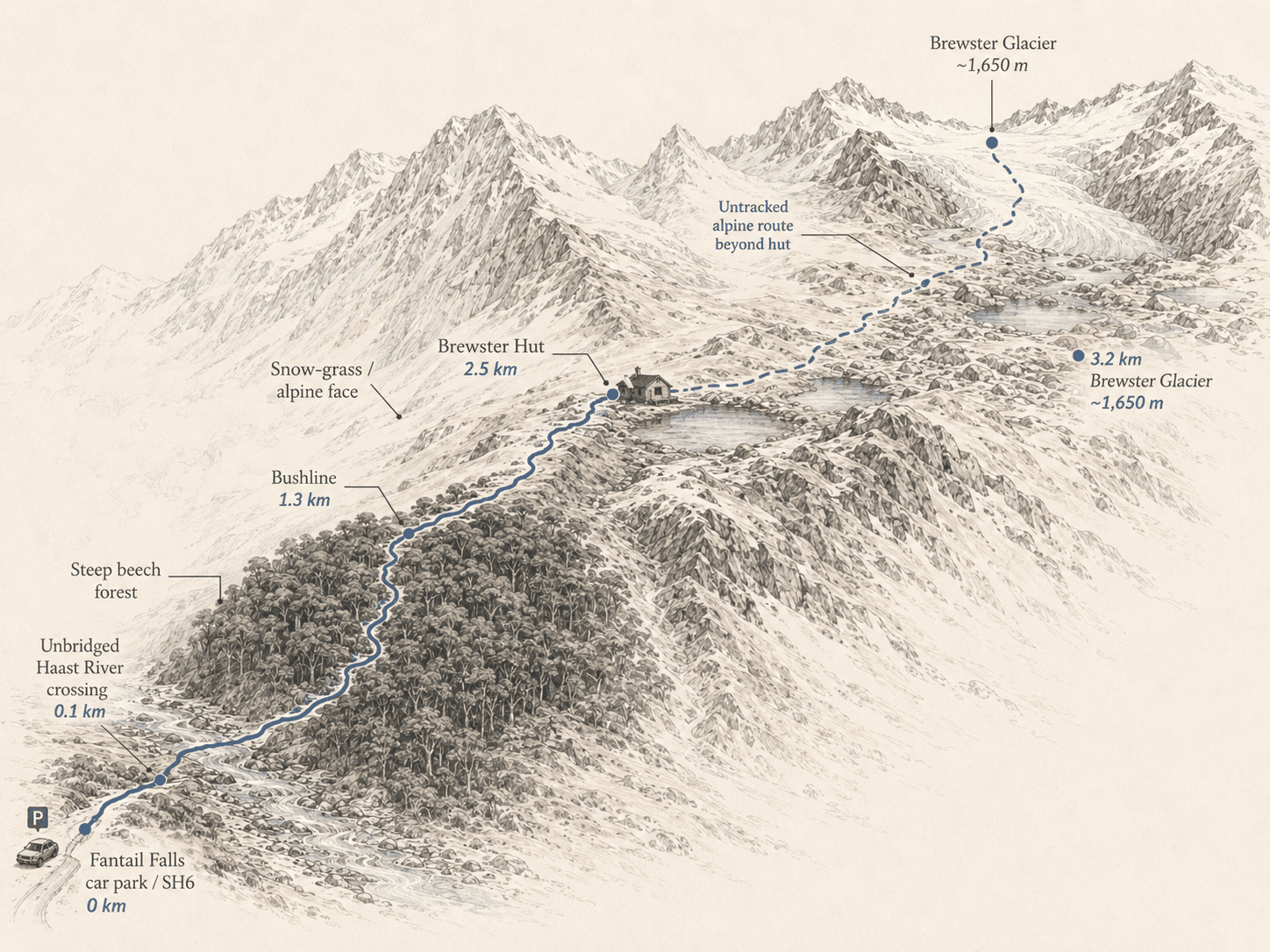
A steep marked climb from Haast Pass to Brewster Hut. The DOC track ends there; the route to Brewster Glacier is unmarked and needs alpine skills.
Haast Pass, Mount Aspiring National Park
Explore this trek
Plan the route
Brewster Track at a glance
- Distance
- 5 km return to Brewster Hut
- Time on trail
- 6–8 hours return; 1–2 days if staying overnight
- Highest point
- Brewster Hut — marked track endpoint
- Best season
- Dec – Apr
- Route type
- Alpine Overnight
- Where you stay
- Hut-based
Times, conditions and route variants can change. Check current local guidance before you set your itinerary.
OVERVIEW
DAY HIKE · AOTEAROA
Train with Peaksted
Heading up Brewster Track? Check your readiness.
A short, steep day hike. A quick readiness check shows where to focus. Planning a longer trek? The training plans are below.
ROUTE PROFILE

DISTANCE
5 km return to Brewster Hut
HIGHEST POINT
Brewster Hut — marked track endpoint
OBJECTIVE DEMAND PROFILE
What This Trek Demands
This is what the objective itself demands — not a reflection of your current fitness.
What to Expect

Terrain
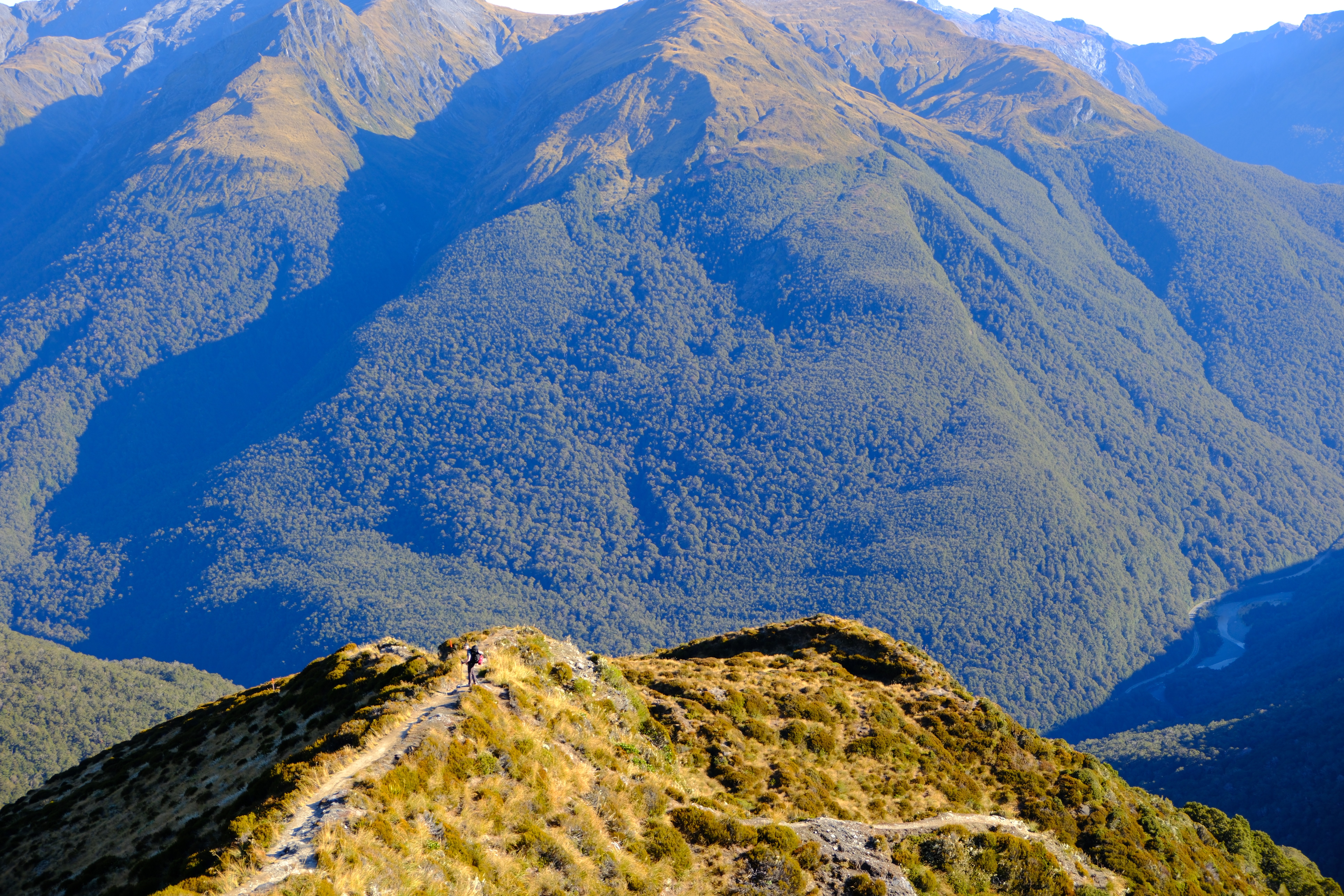
Steep, unrelenting climb from valley beech forest to open alpine tussock, with an unbridged river ford near the start and a narrow, exposed ridge near the top.

Accommodation
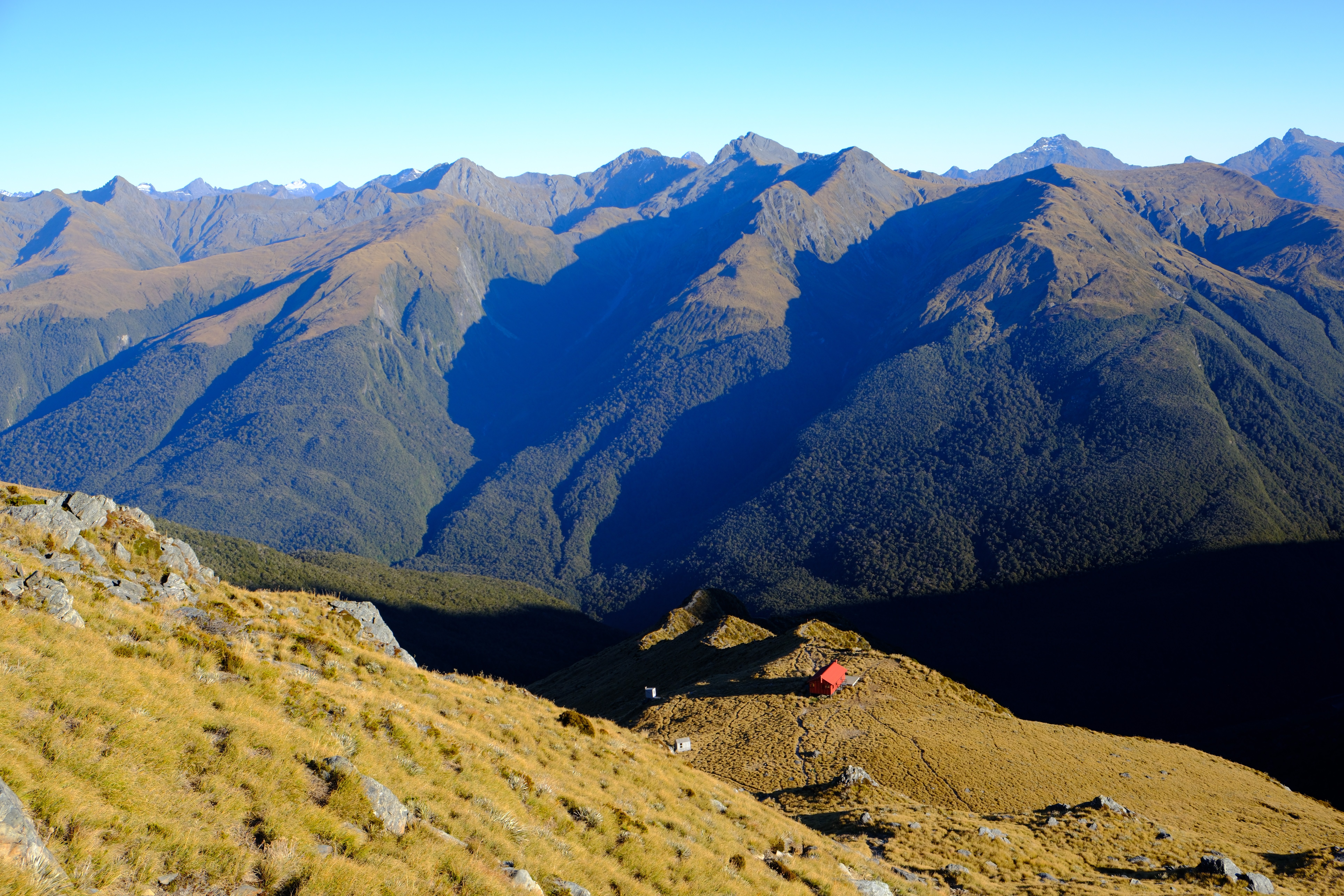
Brewster Hut is the marked track endpoint. An overnight stay can break up the steep return journey. Travel beyond the hut is untracked alpine terrain and is a separate objective.
Typical Day
One long, steep push — 3–4 hours up, 2–3 hours down, with no flat ground to recover on either way.



Unbridged River Crossing
The Haast River crossing near the trailhead has no bridge and can become dangerous quickly after rain.
Relentless Gradient
Nearly 1,000 m of climbing in just 2.5 km leaves no easy sections to catch your breath.
Unmarked Glacier Terrain
Beyond Brewster Hut there is no track — just alpine route-finding across moraine and ice, with crevasse and avalanche risk that has caused fatalities. This is mountaineering territory, not tramping.
How to Prepare
To handle the Brewster Track, focus on these key areas.
1
Build uphill power
Nearly 1,000 m of climbing packed into 2.5 km demands serious leg strength and aerobic capacity.
2
Practice river crossings
The unbridged Haast River crossing near the start can be dangerous after rain — know how to read and cross moving water safely.
3
Train steep descents
What goes up must come down — tired legs need to handle a steep, sustained downhill on the way out.
4
Fuel the push
With no flat ground to recover on either the climb or the descent, eat well before you start and carry enough food to refuel properly at the hut overnight.
READINESS
How does your current capacity compare?
This objective places specific demands across seven physical capacities. Check your readiness to see how you compare, and where to focus before you go.
CHECK YOUR READINESS
PREPARE FOR THE TREK


OFFICIAL INFORMATION
NAVIGATION & MAPS
WEATHER

